The "lizard brain" story
You may have heard the popular explanation. In the 1960s the neuroscientist Paul MacLean proposed that we carry three brains stacked on top of each other: a primitive "reptilian" brain for survival, an emotional one, and a rational one on top. The reptilian brain, the story goes, reacts to movement before we even think.
It is a great story. It is also out of date: neuroscientists have long considered the "triune brain" model wrong. The brain did not evolve in neat layers, and its parts work together all the time.
What research actually shows
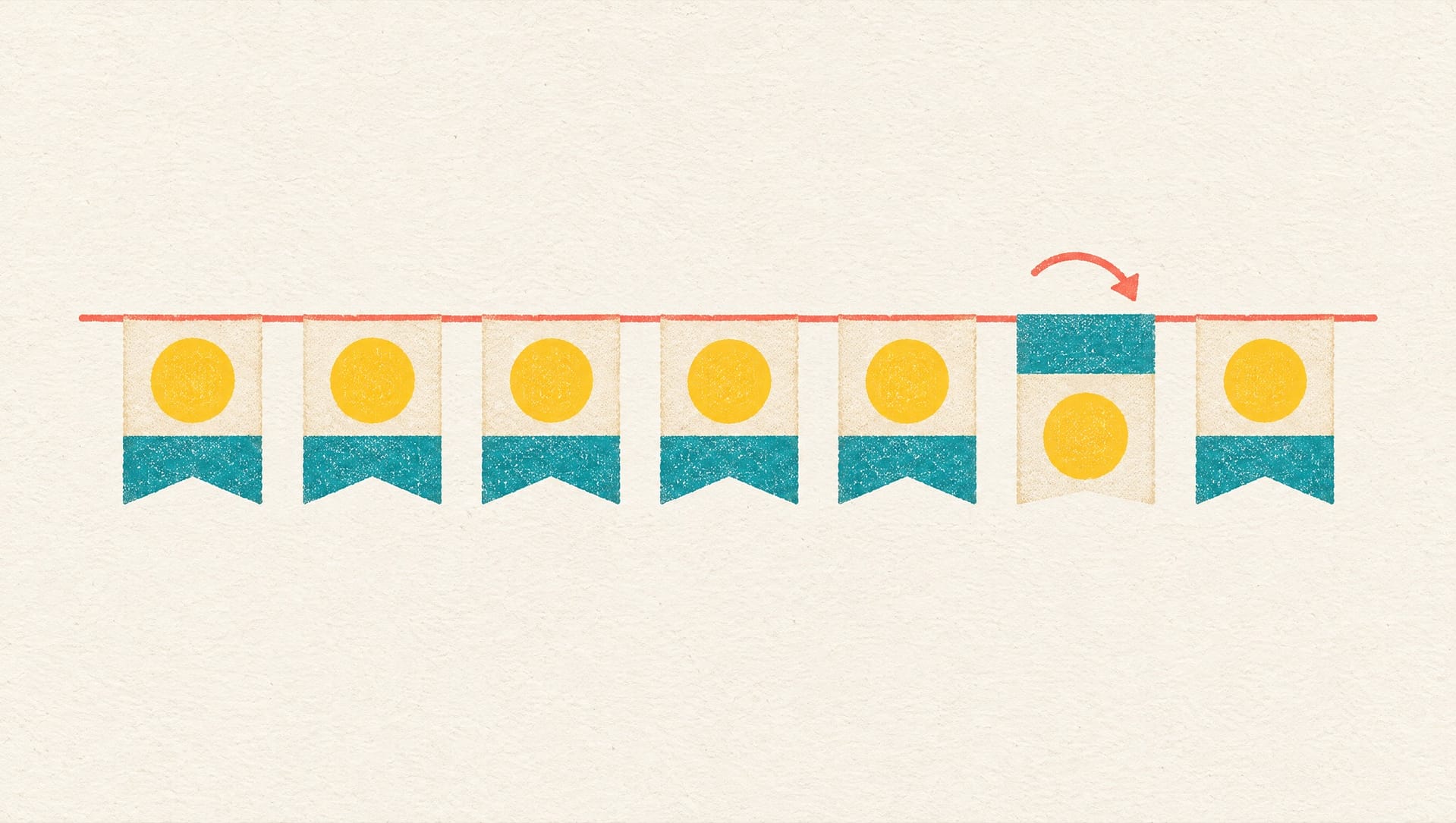
The real finding is more interesting. Movement alone does not automatically grab our attention. What does grab it is movement that starts suddenly, and movement that changes direction unexpectedly. Psychologists have measured both in the lab.
Now think of a flag in the wind. It never moves the same way twice: it snaps, folds, turns and starts again, all day long. For our attention, that is almost impossible to ignore.

Why marketers love it
Getting noticed is the hardest part of advertising. A promotional flag does it without asking: the eye turns on its own, and your logo and message get seen. Next time the customer has to choose, that image is already there.
All that for a few euros, working outdoors from morning to night. Discover our promotional flags.
Sources: Abrams & Christ, "Motion onset captures attention", Psychological Science, 2003; Howard & Holcombe, "Unexpected changes in direction of motion attract attention", Attention, Perception, & Psychophysics, 2010; BBC Science Focus, "The lizard brain lie".